
I Recently Visited Auschwitcz, and I Am So Glad I Did
I recently traveled to Poland where I spent 15 days traveling to 5 different towns - Warsaw, Augustow, Gdnask, Torun, and Krakow. While I could write an entire blog post on what I did, what I ate, where we went, and why the heck we picked Poland, I want to spend some time sharing my trip to Auschwitz. [Side note, I write travel blogs after every time I travel of where to go, what to pack, what to do, things I wish I knew before I got there ect, but I never publish them - am I stuck in the early 2000s of travel blogs? Those were the good days]
When my mom told me she was getting tickets to Auschwitz’s and asked me if I wanted to go, my immediate answer wasn’t “hell yes” for obvious reasons. However, I rarely say no to an opportunity during travel, and I know this is an important event to learn about. The American perspective on the Holocaust and World War II is watered down, biased, and IMHO un-interesting. Plus, I have always learned best through experiences - so off to Auswitcz we went.
What I didn’t know (before the trip) was that Auschwitcz was located in Poland. Honestly, I am a little geographically challenged. If you’ve driven or traveled with me, you know this first hand. I honestly didn’t know much about Polands involvement in WWII (geographically challenged + didn’t pay attention in history). I learned that WWII started in Gdansk, a beautiful town on the Baltic Sea where most of the worlds amber comes from. I learned about the Warsaw Uprising which was a geurilla military effort towards the end of the war, and got a little paper doll house that the kids used to build in hiding (my kids put their ceramic leprechaun in it). I learned about the Augustow Round Up that occurred right after the war in the Augustow Forest, and learned about the mass graves they found just a couple years ago! I learned why Poland was such an important, sought out country. After visiting, I can understand why this country has been fought over for centuries.
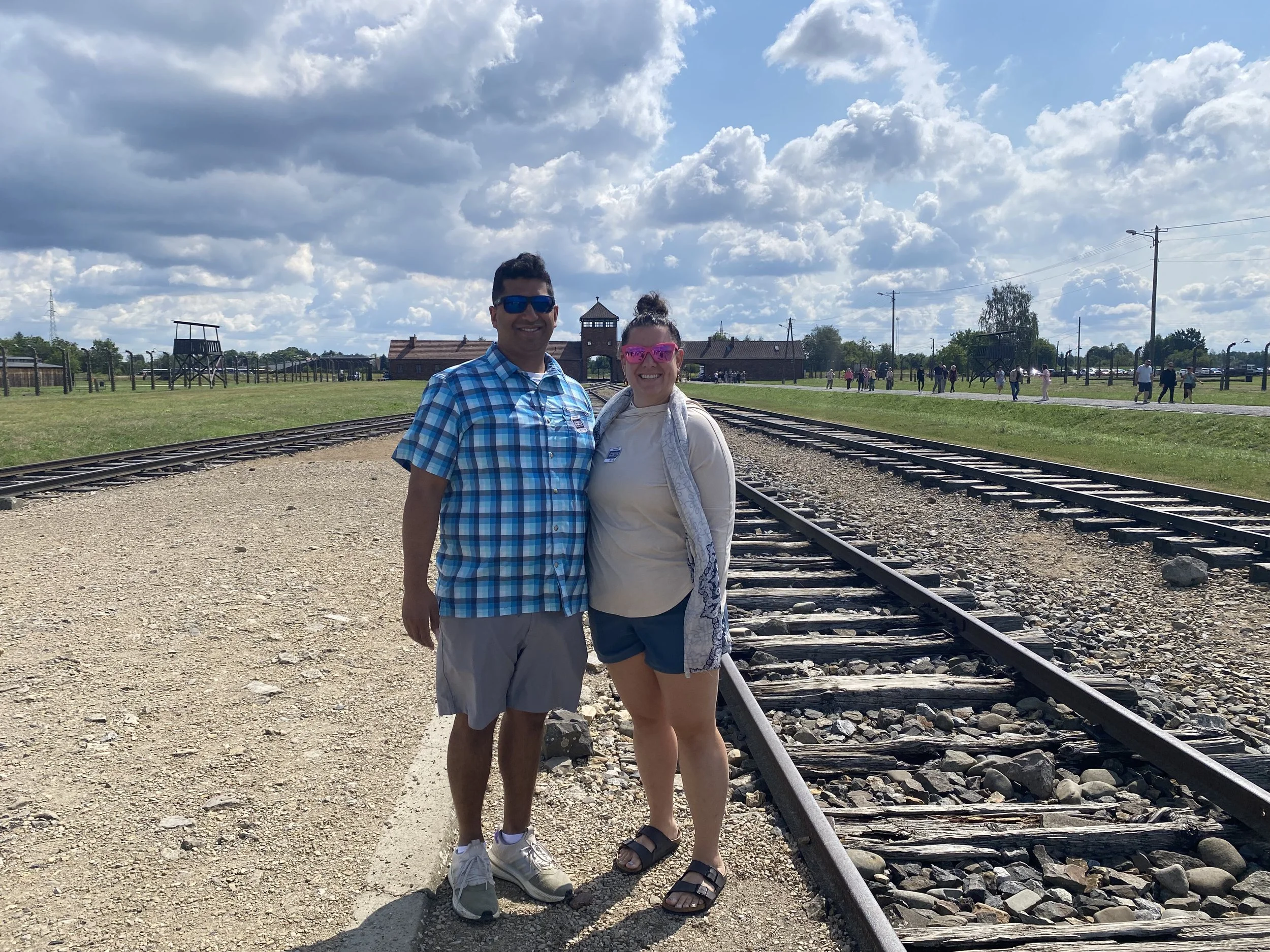
Me & Glen on the railroad and sorting platform
Our tour at Auschwitz was led by a Polish woman whose relatives perished at Auschwitz. This added a real perspective to the humanity and realness of the place. I won’t get into all the details of statistics and whatnot, because what I really wanted to share was my renewed and profound acknowledgement for consent, autonomy, respect, compassion, and treating human life (and death) with the highest dignity. Not only was this a devastating crime against humanity, pure evil, and acts of disgusting racism, it also made me reflect on other times in history (and present!) that still occur. My visit also reminded me that this is why we need to visit places like Auschwitcz, so that we can learn about these disgraces so that we can do better as humans - not just stick our heads in the sand and ignore.
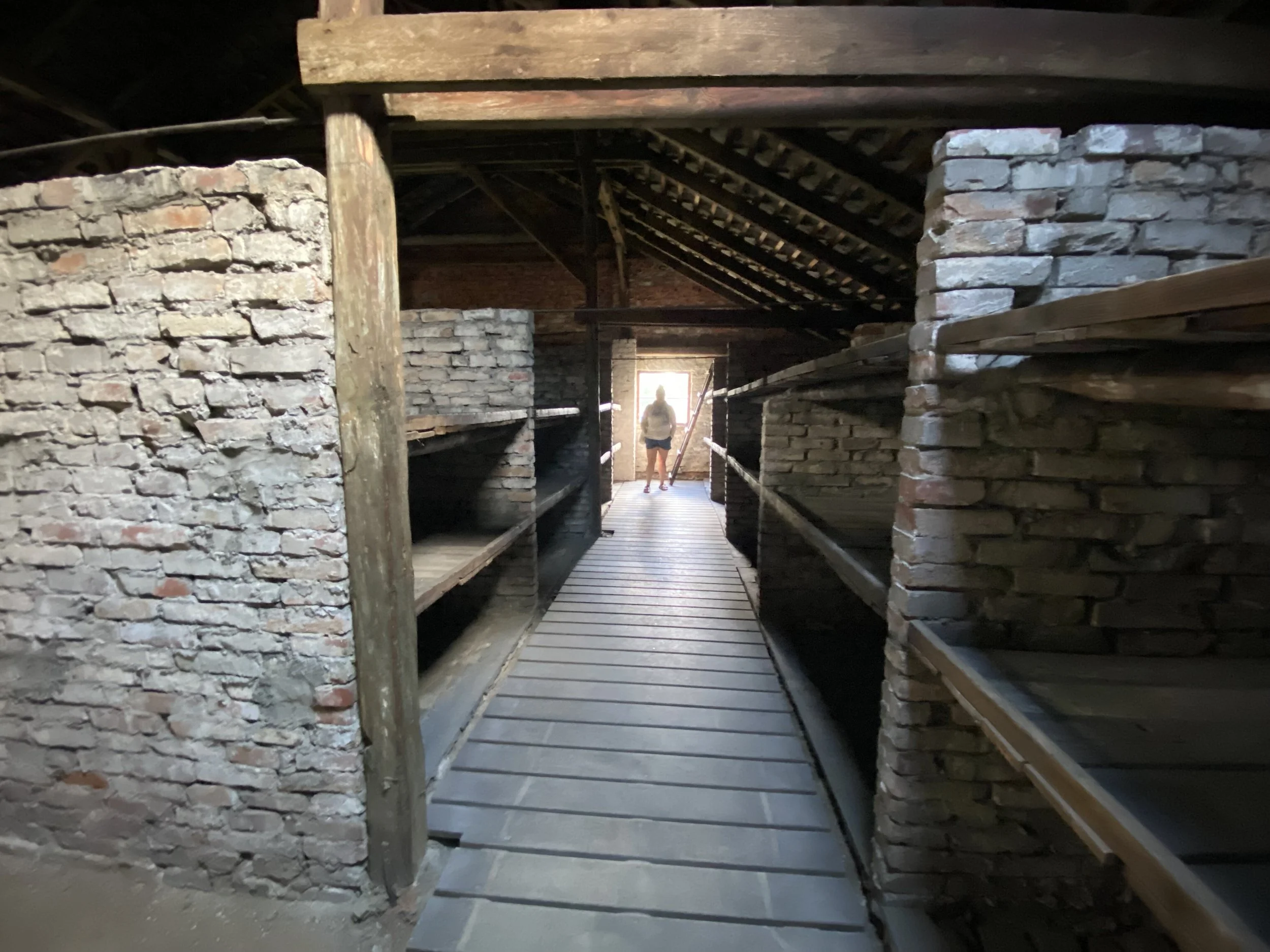
Women's camp in Birkenau (Auschwitz II)
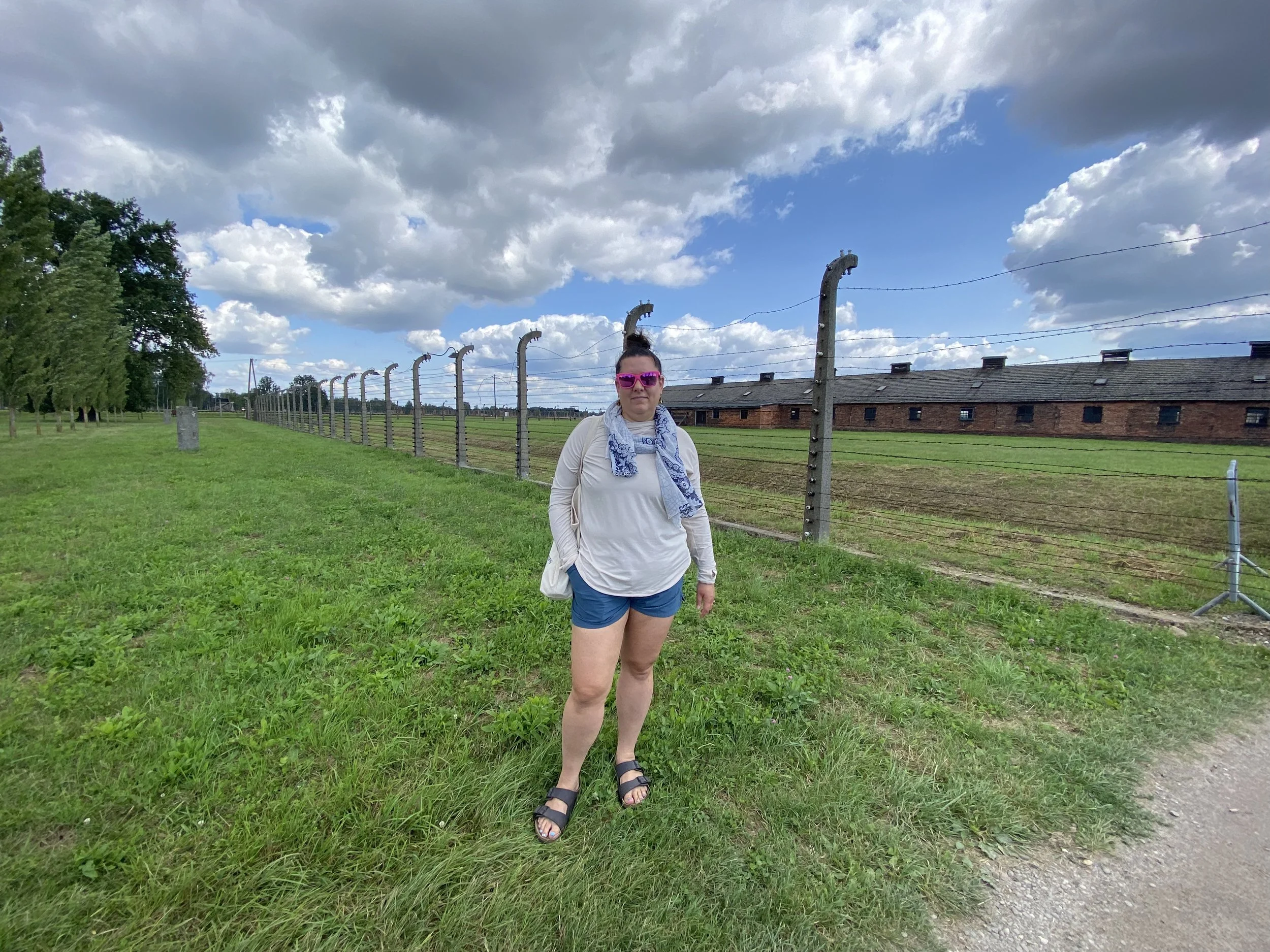
Infront of camp in Birkenau (Auschwitz II)
Something that I reflected on was the medical experimentation done at Auschwitz. They utilized twins to understand how to re-populate their desired race, understand the differences between diseases between identical twins, determine how to change eye color, among many other experimentation. They also would send back specimens to Berlin (which weren’t destroyed until the 90s - mind blown), for further research even decades after the camps were dismantled. I also learned that Bayer had trialed some experimental medications - although I could not find any great literature about this and many of the documents coming from the labor/death camps were destroyed to eliminate evidence. This sounded very similar to:
Dr. Marion Sims medical experimentation on enslaved Black women without their consent in the late 1800s. I have written about this previously in a prior blog post which can be found here. https://www.camelcitywomenswellness.com/blog2/the-health-crisis-no-one-talks-about-enough-disparities-in-black-womens-health [This is also why I do not use the Sims speculum for gynecologic exams].
The Tuskegee Syphillis Trial.
The Puerto Rico birth control trials in the 1960s.
The cervical cell cancer line provided (without consent) by Henrietta Lacks from John’s Hopkins Hospital in the 1950s.
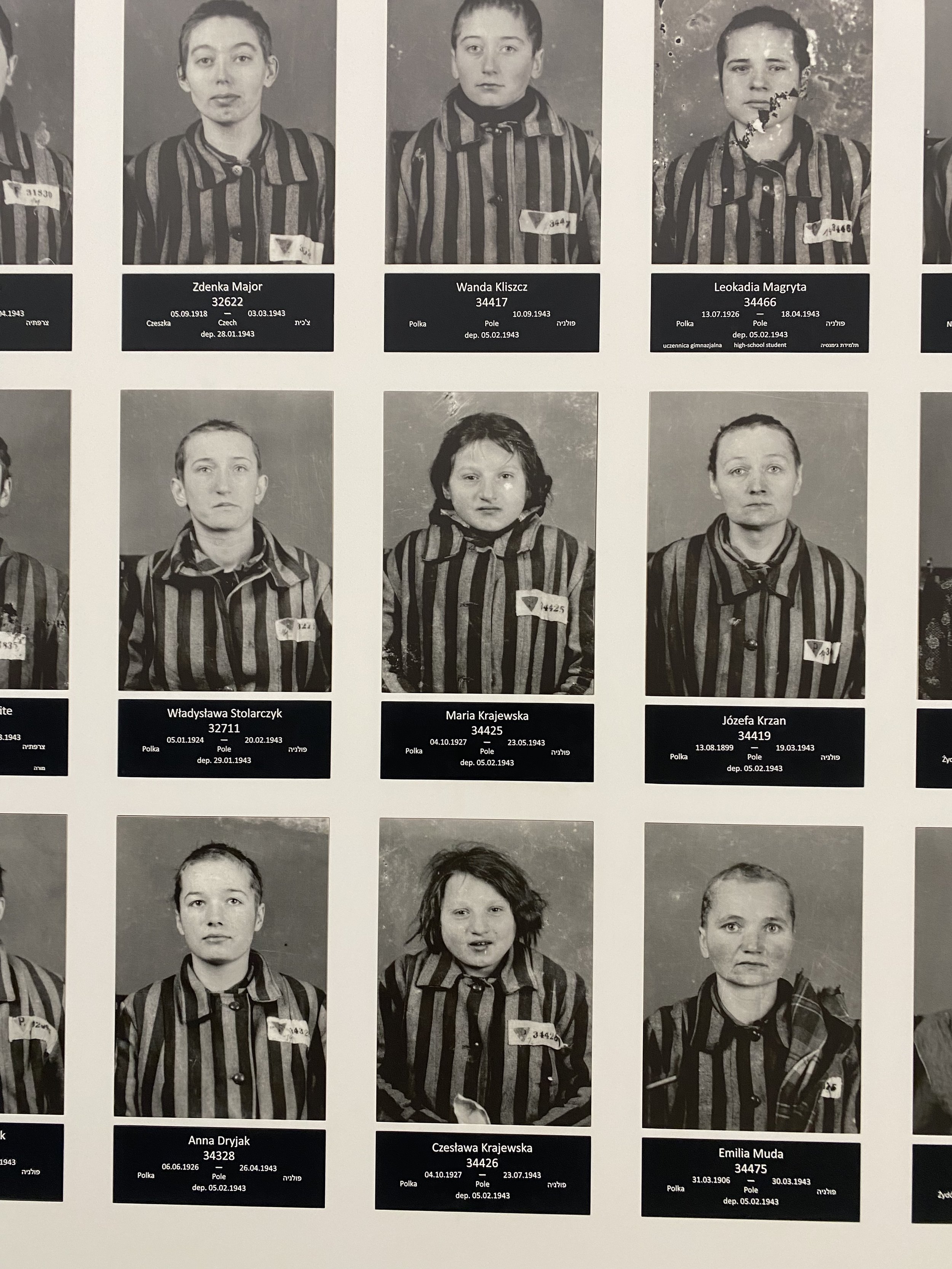
Picture of women and female children prisoners
Using marginalized populations for medical experimentation without consent and causing harm - whether psychological or physical, whether while they are living or after deceased - seems to be a common theme in history. I got curious about what do we do with this information? Is it ethical to continue to use “scientific advancement” when it is gleaned under circumstances where consent is not obtained, humanity is not upheld, and harm occurs? It is clear that any “advancements” gleaned from the Holocaust are not advancements and have not been utilized in medical texts, but what about other scenarios? For example, Henrietta Lacks cell line still exists and is used in research! Where do we draw the line?
The silver lining here is society has taken these grave situations and developed codes, standards, boards, and expectations for medical professionals and researchers. The horrible medical experimentation that occurred during the Holocaust informed the Nuremberg Code. The Nuremberg Code informed the Helsinki Declaration. Both of these, in addition to the Tuskegee Syphillis trials, informed the Belmont Code which centers on 3 principals: respect for persons, beneficence, and justice. This code helped modernize the Institutional Review Board, or the IRB. The IRB is important because all medical research must be approved by an IRB review, to protect subjects and ensure that ethical standards are upheld.
As a medical professional, clinical researcher, and feminist who was born in the wrong era (I am a 2nd wave feminist girlie with sprinkles of 3rd wave feminism) - I think about these bioethical considerations very often. In fact, much of my practice was designed with these in mind (thank you of the awareness of many of these University of Michigan Sexual Health Counseling Program). My comments for you all to ponder is:
Be open and curious to learning about others differences, cultures, preferences.
Question when something doesn’t seem right.
Speak up. Don’t stay silent.
When reading research, read the methods. Don’t skip to the results. Were patients properly consented? Results mean nothing if humans were exploited.
Ask the hard questions.
If you want to learn more about the unethical medical experimentation at Auschwitz, I recommend these two books:
The Twins of Auschwitz: The Inspiring True Story of a Young Girl Surviving Mengele's Hell, by Eva Mozes Kor and Lisa Rojany-Buccieri
I was Doctor Mengele's Assistant: The Memoirs of an Auschwitz Physician, by Miklós Nyiszli
If you want to learn more about the unethical medical experimentation that has happened in the United States, I recommend these two books:
Medical Aparthied: The Dark History of Medical Experimentation on Black Americans from Colonial Times to the Present, by Harriet A. Washington
Medical Bondage: Race, Gender, and the Origins of American Gynecology, by Deirdre Cooper Owens
Thanks for reading this tough post this week. I felt it was important to share.
